
Thanksgiving is often pictured a certain way: a familiar home, a full table, favorite foods, family gathered together, and traditions that happen year after year. But for many families, Thanksgiving may look different this year. A divorce may have changed the family schedule. A move may mean celebrating far away from grandparents. Financial stress may make the holiday feel different than it has in the past. An illness, loss, or family estrangement may leave an empty place at the table.
And when things have changed, the holidays can bring up a lot of feelings.
Children may be excited about Thanksgiving while also missing someone they love. They may look forward to seeing one parent while feeling sad about not seeing the other. They may enjoy a new tradition while wishing things could go back to the way they were. Sometimes those feelings show up as sadness or worry. Other times, they may look like irritability, withdrawal, arguments, or even difficulty sleeping.
It can be tempting to tell children, “It’s okay, everything will be fine.” But sometimes what children need most isn't reassurance that nothing has changed. They need permission to recognize that something has changed—and they are still safe, loved, and supported.
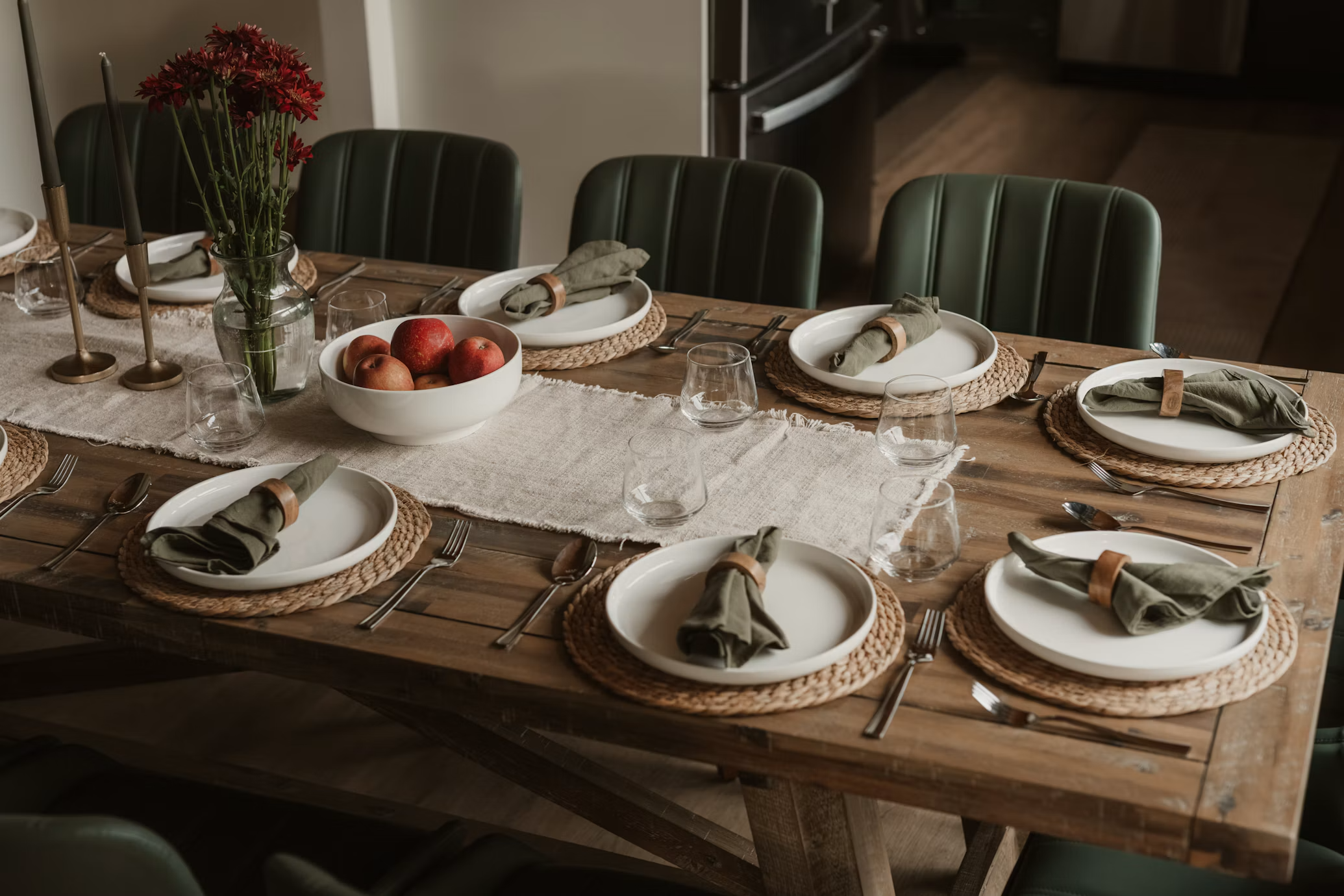
There Doesn't Have to Be a "Right" Thanksgiving
When family circumstances change, there can be pressure to recreate the holidays exactly as they were before. But trying to make everything feel “normal” can sometimes make the differences feel even bigger.
Instead, families can give themselves permission to create a new version of Thanksgiving.
Maybe the celebration happens on a different day. Maybe grandparents join by video call. Maybe there isn't a large family gathering this year. Maybe the traditional meal is replaced with everyone's favorite takeout. Maybe a family starts a completely new tradition.
These changes don't mean Thanksgiving is ruined. They mean the family is finding a way to celebrate within the circumstances they have right now.
Maybe what is right for your family is to have your familiar traditions because that’s what you need.
Let Children Have More Than One Feeling
Children don't always experience holidays in simple ways.
A child can be happy to spend Thanksgiving with Mom and sad that Dad won't be there. They can enjoy their new home and still miss their old one. They can be grateful for the people around them and still grieve the people or traditions that are missing.
We don't have to make one feeling cancel out another.
Sometimes a simple response such as, “You can be excited about Thanksgiving and still miss Grandma. Both feelings can be true,” can help a child feel understood rather than pressured to choose how they are “supposed” to feel.
Focus on Connection, Not Perfection
When life is already stressful, parents can feel pressure to make the holiday special for their children. But children often don't need a perfect Thanksgiving. They need moments of connection.
A favorite meal. A board game at the kitchen table. A walk after dinner. Watching a movie together. Calling someone they love. Sitting together and talking before bedtime.
These small moments can communicate something important to children: Even though things are different, we are still a family, and we are still connected.
Give Children a Sense of What to Expect
Transitions can feel especially difficult for children when they don't know what is coming next. If Thanksgiving plans involve multiple homes, travel, new people, or changes in routine, giving children information ahead of time can help.
Let them know where they will be, who will be there, and what parts of the day they can expect. If plans are changing, explain the changes in simple, age-appropriate language.
Children don't need every detail of an adult situation. They do need enough information to feel prepared.
And when possible, give them something to look forward to—a familiar activity, favorite food, special tradition, or time with someone they love.
Let Children Help Create What's Next
One of the hardest parts of family change is that children often have very little control over what happens.
Creating new traditions can give them a small but meaningful sense of ownership.
Ask: “What is one thing you would like us to do every Thanksgiving?”
Maybe it's making a particular dessert, taking a family walk, playing a favorite game, watching a certain movie, or writing down something everyone is thankful for.
The tradition itself doesn't have to be elaborate. What matters is that children have a voice in creating something familiar within a season of change.
Make Room for What—and Who—is Missing
Sometimes the healthiest thing we can do during the holidays is acknowledge the empty space.
If someone is no longer part of the family gathering, children may notice. If a loved one is sick, away, or has died, they may be thinking about that person even when no one is talking about it.
We don't have to pretend the absence isn't there.
We can say, “I know Grandpa isn't able to be with us this year. I imagine you might be missing him.”
Talking about what is missing doesn't make the holiday sadder. Often, it helps children understand that they don't have to hide their feelings in order to participate in the celebration.
And Remember: Children Are Watching Us
Parents don't have to have everything figured out.
Children can see that adults have difficult feelings, too. What matters is how those feelings are handled.
During stressful family transitions, parents can model taking a breath, asking for help, setting healthy boundaries, and making space for emotions without making children responsible for them.
And especially when divorce, separation, or estrangement is involved, children should not be placed in the middle of adult conflict. They should never feel responsible for choosing sides, carrying messages, or making a parent feel better.
They need permission to love the important people in their lives without feeling caught between them.
A Different Thanksgiving Can Still Be a Meaningful Thanksgiving
The holidays don't have to look the same every year to hold meaning.
Sometimes families are in a season of change. Sometimes the table has fewer people around it. Sometimes the celebration happens in a new home, on a different day, or in a completely different way.
That doesn't mean something has gone wrong.
It means the family is adapting.
And perhaps the most important thing we can give children this Holiday Season isn't a perfect holiday. It's the reassurance that families can change, traditions can change, circumstances can change—and they can still be surrounded by love, connection, and belonging.
This year, instead of asking, “How do we make the Holidays feel like it used to?” we might ask a different question:
“How can we help our family feel connected in the Holiday we have right now?”
